
Greeting folks! Welcome to MZS online business promoters. Lets boost up your small businesses into the world of internet , let the world know about your businesses. Lets glow :) Our mission is to boost your websites and your social media pages into the internet world , whether it is on-page or off-page SEO and SMM it will be done successfully as per assignment’s requirements .Inbox us at official mzsonlinebusinesspromoters@gmail.com
Showing posts with label MZS online business promoters. Show all posts
Showing posts with label MZS online business promoters. Show all posts
Saturday, 1 July 2017

Friday, 30 December 2016
Thursday, 15 December 2016
How Pokemon Go Helps Local Businesses Lure More Customers | TODAY
continue to see the video here : YOUTUBE
Thursday, 8 September 2016
Sunday, 4 September 2016
How do you rate links from sites like Twitter and Facebook?
continue to see the video here : YouTube
Friday, 19 August 2016
Tuesday, 9 August 2016
Friday, 8 July 2016
Wednesday, 6 July 2016
Website Promotion Success Pack by The Best International Promoter
continue to watch the video here :YouTube
Saturday, 18 June 2016
Thursday, 16 June 2016
Sunday, 12 June 2016
Friday, 13 May 2016
How To Start A 3D Printing Business (Even Without Owning A 3D Printer)
continue to watch this video : YouTube
Friday, 12 February 2016
Better Than Human: Why Robots Will — And Must — Take Our Jobs
It’s hard to believe you’d have an economy at all if you gave pink slips to more than half the labor force. But that—in slow motion—is what the industrial revolution did to the workforce of the early 19th century. Two hundred years ago, 70 percent of American workers lived on the farm. Today automation has eliminated all but 1 percent of their jobs, replacing them (and their work animals) with machines. But the displaced workers did not sit idle. Instead, automation created hundreds of millions of jobs in entirely new fields. Those who once farmed were now manning the legions of factories that churned out farm equipment, cars, and other industrial products. Since then, wave upon wave of new occupations have arrived—appliance repairman, offset printer, food chemist, photographer, web designer—each building on previous automation. Today, the vast majority of us are doing jobs that no farmer from the 1800s could have imagined.
click here to continue : wired
Sunday, 31 January 2016
Text Neck: Is Smartphone Use Causing Your Neck Pain?
Virtually unheard of two years ago, “text neck” is a repetitive strain injury that’s becoming more common as more people hunch over smartphones. Aggravating muscle pain in the neck and shoulders, and sometimes lower back, is occurring even in teens and adolescents.
“Typically, incidence of neck pain increases with age. But today we’re seeing and treating more patients — younger patients — who never reported neck pain before,” says Robert Bolash, MD, a pain specialist at Cleveland Clinic.
A load of hurt
How can using a smartphone or other mobile device cause so much hurt? It’s all in how you look at it. Literally. Looking down, dropping your head forward, changes the natural curvature of your neck. Over time, that misalignment can strain muscles and cause wear and tear on the structures of the neck.
According to Dr. Bolash, three things happen when you drop your head:
- Your neck moves forward.
- Your shoulders round forward or lift up toward your ears.
- Your neck and shoulder muscles spasm (contract).
“Neck muscles, in their proper position, are designed to support the weight of your head, about 10 to 12 pounds,” says Dr. Bolash. “Research shows that for every inch you drop your head forward, you double the load on those muscles. Looking down at your smartphone, with your chin to your chest, can put about 60 pounds of force on your neck.”
Besides muscle pain, text neck can cause a host of other health concerns. Sitting in a slumped position restricts your lungs’ ability to expand, impairing your lung capacity. Inhaling less oxygen means your heart needs to pump harder to distribute more oxygen-carrying blood through your body.
Three tricks to nix text neck
To nix text neck, improve your posture. Dr. Bolash recommends you:
- Straighten up. Learn proper posture and neck alignment by peeking at your profile in a mirror. If you’re standing correctly, you should be able to draw a vertical line from your ear to your shoulder.
- Arch back. If your posture isn’t perfect, try doing shoulder extensions. Arch your neck and upper back backward, pulling your shoulders into alignment under your ears. This simple stretch can alleviate stress and muscle pain.
- Look forward. Rather than tilting your chin down to read your mobile device, raise the device to eye level. The same goes for your desktop computer. Your monitor screen should be at eye level so your head isn’t perpetually dropping and causing muscle strain.
Another texting injury: BlackBerry® thumb
While not part of text neck, BlackBerry thumb (hand, finger or thumb pain named after the popular mobile device) is another texting-induced repetitive strain injury.
“A topical pain reliever may help soothe a strained tendon,” says Dr. Bolash. “But, ideally, you should limit how much you’re texting. Composing a manuscript with your thumbs, on a screen that’s a couple of inches wide, isn’t what mobile devices were made for.”
Courtesy by : Cleveland Clinic
Wednesday, 20 January 2016
10 technologies shaping the future of IT
Which of today's newest shipping technologies will cast the longest shadow over business computing? Here are our best guesses
Check this slider here : infoworld
Monday, 18 January 2016
Top 10 Best Intelligence Agencies In The World 2015
An intelligence agency refers to a government institution which collects, analyze and exploit valuable information and intelligence to protect the national debts.
The intelligence agencies help country to cope with security matters and to protect the nation from likely security breach; the core purpose of spy agencies is collection of secret information to secure the country from any internal and external happening which harm the stability of state either economically or politically.
The intelligence agencies also provide indirect security to tangible and intangible infrastructure of the country like nuclear program or any document containing sensitive information.
Personnel of any intelligence agency has been called agents, spies or undercover officers who vowed to devote his life and worked as secret agent for the state. Here are top 10 intelligence agencies of 2015 are given which are working in present for its respective countries to lock the safety of nation.
1. Inter-Service Intelligence, (ISI) Pakistan
The Directorate for Inter-Services Intelligence (Inter-Services Intelligence) is the premier intelligence service of Pakistan, founded in1948. It has responsibilities of collecting information of critical national security and intelligence assessment for Government of Pakistan.
The Directorate for Inter-Services Intelligence (Inter-Services Intelligence) is the premier intelligence service of Pakistan, founded in1948. It has responsibilities of collecting information of critical national security and intelligence assessment for Government of Pakistan.
American Crime News declared Pakistan Inter Services Intelligence as world’s best and strongest intelligence agency, headquartered in Shahrah-e-Soharwardi in Islamabad. ISI is most known and famous agency among three agencies working in Pakistan; others are Intelligence Bureau (IB) and Military Intelligence (MI). ISI is known as command immense power in the Pakistani establishment, referred to principle brainpower organization of the country.

2. Central Intelligence Agency, (CIA) United States
Central Intelligence Agency (CIA) is most prominent and familiar among other United States National Security Agency (NSA), Defense Intelligence Agency (DIA) and Federal Bureau of Investigation (FBI). CIA has been founded in 1947, considered as an independent and top agency in the whole world.
Central Intelligence Agency (CIA) is most prominent and familiar among other United States National Security Agency (NSA), Defense Intelligence Agency (DIA) and Federal Bureau of Investigation (FBI). CIA has been founded in 1947, considered as an independent and top agency in the whole world.
The prime functions includes acquiring and analyzing information about foreigners, public relations for required data and underground operations at the direction of the president of United States. The agency headquarter is located in Langley, Virginia, a few miles west of Washington.

3. Secret Intelligence Service, (MI6) United Kingdom
MI6 formally known as the Secret Intelligence Service was created just before the World War I for the possible reach the activities of the Imperial German government. The Agency headquarter called SIS Building, has been situated in Vauxhall Cross, London.
MI6 formally known as the Secret Intelligence Service was created just before the World War I for the possible reach the activities of the Imperial German government. The Agency headquarter called SIS Building, has been situated in Vauxhall Cross, London.
MI6 has been closely involved in various conflicts in 20th and 21st centuries but not officially acknowledged till 1994. The secret front line” of Britain`s national security has responsibilities to keep close eye on internal and external terror activities, organizations and countries which could harm national defense and state security.
4. Federal Security Services, (FSB) Russia
The Federal Security Service of the Russian Federation (FSB) is the principal security agency of the Russian Federation and the main successor agency to the USSR’s Committee of State Security (KGB).
The Federal Security Service of the Russian Federation (FSB) is the principal security agency of the Russian Federation and the main successor agency to the USSR’s Committee of State Security (KGB).
Formed in 1995, the agency is committed to the country for intelligence, counter-terrorism and security enhancement and defense security. It has at least 250K personnel containing undercover agents, secret officers and foreign spies; it’s mainly fight the state crime, terror acts, drug smuggling and other internal security violence in the country.

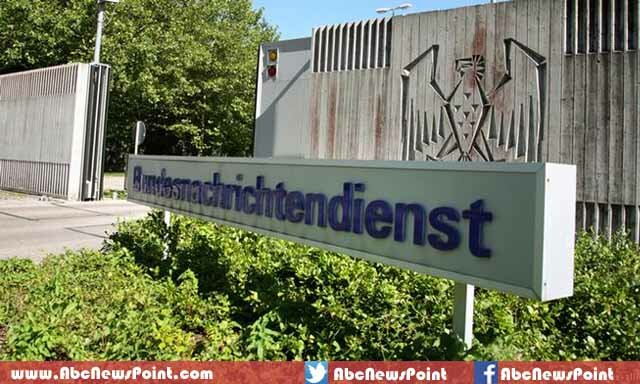
5. Bundesnachrichtendienst, (BND) Germany
The Bundesnachrichtendienst (BND), Federal Intelligence Service was established prior to World War II to spy the enemies’ strategies and plans, headquartered in Pullach near Munich.
The Bundesnachrichtendienst (BND), Federal Intelligence Service was established prior to World War II to spy the enemies’ strategies and plans, headquartered in Pullach near Munich.
The Budget of BND is in billions as it used most modern technology to spy over its enemies for national security concerns, considered as one of the best and well-organized intelligence agencies in the world. However, the main objective of Agency is surveillance of sensitive issues referred to domestic and foreign intelligence.
6. Research and Analysis Wing (RAW), India
Research and Analysis Wing (RAW) is India’s independent intelligence agency created in 1968. The agency head only reports to Prime Minister, not answerable to the Indian Parliament in any way as compared to other western intelligence agencies.
Research and Analysis Wing (RAW) is India’s independent intelligence agency created in 1968. The agency head only reports to Prime Minister, not answerable to the Indian Parliament in any way as compared to other western intelligence agencies.
however, its prime purpose it to accumulate information regarding terror activities in the country which faced number of terror attacks in past years. RAW main focus is India’s neighbor Pakistan, engaged in many operations against Pakistan with physical secret basis in the country.

7. Direction Generale De La Securite Exterieure (DGSE), France
The General Directorate for External Security (DGSE) replaced the replacing the older Service de Documentation Extérieure et de Contre-Espionnage (SDECE) which has been formed in 1982. Despite of its recent formation, the agency went responsible for the collection and interpretation of intelligence for sensitive concerns of France.
The General Directorate for External Security (DGSE) replaced the replacing the older Service de Documentation Extérieure et de Contre-Espionnage (SDECE) which has been formed in 1982. Despite of its recent formation, the agency went responsible for the collection and interpretation of intelligence for sensitive concerns of France.
The Agency has not famous as other intelligence agencies but claimed that it has prevented 15 terror attacks in France; with a personnel of 5000 it works under the Safeguard Service of French Government and has been placed on seventh number in our list.

8. Australian Secret Intelligence Service (ASIS), Australia
The Australian Secret Intelligent Service (ASIS) agency has been founded in 1951 by the executive power of the Commonwealth, the mission of ASIS is ‘Protect and promote Australia’s vital interests through the provision of unique foreign intelligence services as directed by Government’.
The Australian Secret Intelligent Service (ASIS) agency has been founded in 1951 by the executive power of the Commonwealth, the mission of ASIS is ‘Protect and promote Australia’s vital interests through the provision of unique foreign intelligence services as directed by Government’.
Intelligence agency of Australia is also lined up in top intelligence agencies of 2015 as it has wide hold on intelligence all over the world with its disperse personnel. There were many controversies in the ASIS; however, it has been resolved with conversion of it into a statuary body.

9. Ministry of State Security (MSS), China
The Ministry of State Security (MSS) is the intelligence-security agency of the People’s Republic of China, the headquarters located near the Ministry of Public Security of the People’s Republic of China in Beijing The agency has been responsible for counter-intelligence, political security and far-off intelligence.
The Ministry of State Security (MSS) is the intelligence-security agency of the People’s Republic of China, the headquarters located near the Ministry of Public Security of the People’s Republic of China in Beijing The agency has been responsible for counter-intelligence, political security and far-off intelligence.
MSS is working parallel to the public security bureaus but has non-state security matters often collaborate both for the large extent. The Agency was established in 1937 which has been founded in 1949 by Communist Part of China, collected antithetical information for civil war in China.

10. The Institute For Intelligence and Special Operation (MOSAD), Israel
MOSSAD is the intelligence agency of Israel, most active organization in the country committed to collect intelligence involved in counter-terrorism and various covert operations. The director of agency is bound to report activities to the head of state Prime Minister of Israel.
MOSSAD is the intelligence agency of Israel, most active organization in the country committed to collect intelligence involved in counter-terrorism and various covert operations. The director of agency is bound to report activities to the head of state Prime Minister of Israel.
Contrary to others MOSSAD is considered as most powerful agency due to scarce widened resources, the undercover agents has been present in various countries to collect the valuable information for the country. Mossad’s most notorious unit is the “Special Operations Division” or Metsada which has involved in many assassinations and secret operations worldwide.

courtesy by : abcnewspoint
Sunday, 3 January 2016
17 Emerging Energy Technologies That Will Change The World
Policy Horizons Canada worked with futurist and data visualizerMichell Zappa of Envisioning to produce a report called MetaScan 3: Emerging Technologies and accompanying infographics. We are reproducing the summary for emerging energy technologies.

Space-based solar power could be scientifically viable by 2025.
Below are technologies related to energy under three key areas of accelerating change: Storage, Smart grid and Electricity generation. Energy storage involves new, cost-effective ways of storing energy, either in improved batteries, as new fuels or other ways. A smart grid is a set of technologies that pairs information with moving electricity around, enabling more efficient generation and use of energy. Electricity generation is characterized by technologies that generate power from unused sources and that more efficiently produce electric power or fuels from sources in use today.
We have included predictions based on consultation with experts of when each technology will be scientifically viable (the kind of stuff that Google, governments, and universities develop), mainstream (when VCs and startups widely invest in it), and financially viable (when the technology is generally available on Kickstarter).
Storage
Fuel cells: Unlike batteries, fuel cells require a constant source of fuel and oxygen to run, but they can produce electricity continually for as long as these inputs are supplied. They inherently displace the need for natural gas turbines, and are ideally used for stationary power generation or large passenger vehicles such as buses (especially at energy-dense future iterations of the technology).
Scientifically viable in 2013; mainstream in 2015; and financially viable in 2016.
Lithium-air batteries: Advances in materials technology is enabling the advance of high energy Li-air batteries which promise an energy density that rivals gasoline, offering a five-fold increase compared to traditional Li-Ion batteries. By using atmospheric oxygen instead of an internal oxidizer, these batteries could dramatically extend electric vehicle range.
Scientifically viable in 2017; mainstream in 2018; and financially viable in 2020.
Hydrogen energy storage & transport: Hypothetical evolution of existing power grids, transporting and storing hydrogen instead of electricity. Could be used in combination with various kinds of energy transformation methods, minimizing loss and maximizing storage capacity.
Scientifically viable in 2019; mainstream in 2021; and financially viable in 2022.
Thermal storage: Often accumulated from active solar collector or from combined heat and power plants, and transferred to insulated repositories for use later in various applications, such as space heating, domestic or process water heating.
Scientifically viable in 2022; mainstream in 2024; and financially viable in 2027.
Smart Grid
First-generation smart grid: Electrical meters that record consumption of electric energy in real time while communicating the information back to the utility for monitoring and billing purposes. Can be used for remote load-balancing such as disabling non-essential devices at peak usage
Scientifically viable in 2014; mainstream in 2015; and financially viable in 2016.
Distributed generation: Generates electricity from many small energy sources instead of large centralized facilities. Centralized power plants offer economies of scale, but waste power during transmission, and are inefficient in rapidly adapting to grid needs.
Scientifically viable in 2017; mainstream in 2021; and financially viable in 2022.
Smart energy network: Speculative global energy & power infrastructure and set of standards which can be used interchangeably. Could theoretically mimic characteristics of the Internet in channeling heat, energy, natural gas (and conceivably hydrogen) from local and distant sources depending on global demand.
Scientifically viable in 2019; mainstream and financially viable in 2020.
Electricity Generation
Tidal turbines: A form of hydropower that converts tidal energy into electricity. Currently used in small scale, with the potential for great expansion.
Scientifically viable in 2015; mainstream and financially viable in 2017.
Micro stirling engines: Micrometer sized power generators that transform energy into compression and expansion strokes. Could hypothetically be 3D-printed on the fly and cover entire heat-generating surfaces in order to generate power.
Scientifically viable in 2020; mainstream in 2026; and financially viable in 2027.
Solar panel positioning robots: Small-scale robots able to re-position solar panels depending on weather conditions. More efficient than attaching each panel to motorized tracking assemblies.
Scientifically viable in 2014; mainstream in 2016; and financially viable in 2017.
Second-generation biofuels: New biofuel technologies, such as cellulosic ethanol and biodiesel from microalgae, promise to produce conventional fuel-compatible energy at low or zero greenhouse gas emissions.
Scientifically viable in 2016; mainstream in 2017; and financially viable in 2021.
Photovoltaic transparent glass: Glass with integrated solar cells which converts IR and some visible light into electricity. This means that the power for an entire building can be supplemented using the roof and façade areas.
Scientifically viable in 2017; mainstream in 2020; and financially viable in 2021.
Third-generation biofuels: Moving beyond today's organisms, 3rd generation biofuels involve genetic modification of organisms to produce new fuels by unconventional means. Examples include direct production of hydrogen from highly efficient algae, and production of energy-dense furans for automotive use.
Scientifically viable in 2022; mainstream in 2024; and financially viable in 2025.
Space-based solar power: Collecting solar power in space, beamed back as microwaves to the surface. A projected benefit of such a system is much higher collection rates than what is possible on earth. In space, transmission of solar energy is unaffected by the filtering effects of atmospheric gasses.
Scientifically viable in 2025; mainstream in 2027; and financially viable in 2028+.
Micro-nuclear reactors: A small, sealed version of a nuclear reactor (approximately a few tens of meters in length) capable of being shipped or flown to a site. Currently able to provide 10 MW of power, plans are for 50 MW capacity in the near future.
Scientifically viable in 2022; mainstream and financially viable in 2023.
Inertial confinement fusion (break-even): An approach to fusion that relies on the inertia of the fuel mass to provide confinement. To achieve conditions under which inertial confinement is sufficient for efficient thermonuclear burn, a capsule (generally a spherical shell) containing thermonuclear fuel is compressed in an implosion process to conditions of high density and temperature.
Scientifically viable in 2013; mainstream and financially viable in 2021.
Thorium Reactor: Thorium can be used as fuel in a nuclear reactor, allowing it to be used to produce nuclear fuel in a breeder reactor. Some benefits are that thorium produces 10 to 10,000 times less long-lived radioactive waste and comes out of the ground as a 100% pure, usable isotope, which does not require enrichment.
Scientifically viable in 2025; mainstream in 2026; and financially viable in 2027.
Monday, 28 December 2015
15 Ways The World Will Be Awesome In 2050
The future scares a lot of people. Climate change, a growing population, and fewer natural resources will certainly pose new challenges for the human race in the next few decades.
But when you consider ongoing social and economic progress and all of the coming innovations in science and technology, there's plenty of room for optimism.
We've pulled out some of our favorite ideas about the future of our world.
Child mortality rates will be vastly lower.

During the 20th century, the sharpest declined in mortality involved deaths of children under 5 years old, according to the assessment on human health from the Copenhagen Consensus on Human Challenge. "However, the pace of decline has been rapid in low and middle-income countries, especially since 1950," that report said.
Between 1990 and 2012, the number of under-5 child deaths went from 90 deaths per 1,000 live births to 48 deaths per 1,000 live births, according to a 2013 report from UNICEF.
The Copenhagen report found these trends are likely to continue, with the rate dropping to 31 per 1,000 live births in 2050 and even more dramatic declines in regions like Africa.
The factors behind this decline include prevention of mother-to-child transmission of HIV, immunization against diseases, insecticide-treated nets to control diseases like malaria, andmicronutrients for children to prevent life-threatening deficiencies.
We'll have vaccines and cures for many diseases.

While we can't know what will threaten our bodies in the future, cures and vaccines for current diseases and illnesses will surely improve by 2050.
Researchers are confident that within 20 years they can design a vaccine to stop the spread of HIV, which currently kills anywhere from 1.5 million to 2 million people per year. That's according to Martin Wiselka, consultant in infectious diseases at the University Hospitals of Leicester NHS Trust, as reported in The Daily Mirror.
To be sure, we've had troubles coming up with a traditional vaccine to prevent HIV in the past. However, scientists are making big strides in understanding how our immune system interacts with the virus.
While treatment already exists for malaria, which kills 1 million people a year, many organizations are working to eradicate the disease entirely. Some remain hopeful for a vaccine, while others go to the source by genetically engineering mosquitoes carrying the parasite to self-destruct.
A better understanding of the processes behind Alzheimer's bring us closer and closer to a cure.
A U.S. vaccine already exists for meningitis, which other countries will soon adopt.
As for cancer, we're making progress in treating some types. A rheumatoid arthritis drugrecently cured a young child's leukemia. A modified measles vaccine put another woman's cancer into remission. Nanoparticles could even attack cancer stem cells, which cause tumors to form. Others are trying to teach the body to attack cancer directly, by training the immune system with "cancer vaccines."
Humans could be live forever as computerized brains.

In the coming decades, some scientists hope to upload the contents of human brains into computers, allowing people to live forever inside a robotic body or even as a hologram.
Neuroscientist Randal Koene and Russian financial-backer Dmitry Itskov are trying to transfer human consciousness and brain functions to an artificial body by 2045 by "mapping the brain, reducing its activity to computations, and reproducing those computations in code," according to Popular Science.
Koene said his work isn't just about achieving immortality. It's about giving people the ability to go places and do things that are impossible in our own bodies, like traveling close to the sun.
Even if we don't meet that goal by 2050, people alive today may still have their brains uploaded in the future. That's because other scientists are working on preserving human brains and all their contents indefinitely through immersion in chemical solutions.
"If we could put the brain into a state in which it does not decay, then the second step could be done 100 years later, and everyone could experience mind uploading first hand," scientist Kenneth Hayworth, of the Brain Preservation Foundation, told Popular Science. Hayworth believes scientists may discover how to preserve a mouse brain by 2015.
There will be no more poor countries.

"By 2035, there will be no more poor countries," Bill Gates wrote earlier this year. By 2050, the development of countries around the world will be that much further along.
Already 700 million fewer people lived in extreme poverty in 2010 than they did in 1990, and the rate of improvement has also slowly increased since the turn of the century. (Extreme poverty was defined as $1 day in 1990 but was redefined as $1.25 a day in 2008.) Today, the World Bank has set a new goal: lowering the number of people living in extreme poverty to no more than 3% of the population by 2030.
Gates says increased foreign aid will play a key role in eradicating poverty on a global scale.
Jeffrey D. Sachs, special advisor to the United Nations secretary general, calls for "new kind of mixed capitalism" to eliminate poverty — combining disease control, public education, and the promotion of new science and technology with private market forces. He points to parts of Africa, where the introduction of cellphones combined with better malaria control have slashed rural poverty.
If the lagging countries can maintain a sustainable higher growth path, the global poverty ratiowill fall from about 21% in 2005 to less than 2.5% in 2050, and the number of people living in absolute poverty will decline by another billion, according to the United Nation's Food and Agriculture Organizations.
To be sure, the future holds threats for impoverished people in the world. Global climate change is already threatening the homes and livelihoods of people in places like Panama and aonce-lively fishing community in England. Time will tell whether the continued focus on eradicating poverty will outweigh the detrimental impact of climate change.
Artificial intelligence will be insanely good.

The rise of artificial intelligence (AI) could generally be a good thing, assuming there isn't a "Terminator" scenario. While robots could replace some workers, it's important to remember that past innovations have unlocked whole new industries and new jobs along with them . Therise of AI could do the same.
What's more, think how much better robots could make our world.
Hans Moravec of Carnegie Mellon University's Robotics Institute predicts that by 2050 freely moving robots that outperform humans both physically and intellectually will run entire businesses by themselves. That could allow humans to "occupy their days with a variety of social, recreational and artistic pursuits, not unlike today's comfortable retirees or the wealthy leisure classes," he wrote in Scientific American. It could also lead to new breakthroughs, as "mass-produced, fully educated robot scientists working diligently, cheaply, rapidly and increasingly effectively will ensure that most of what science knows in 2050 will have been discovered by our artificial progeny!"
Robots could also provide people with emotional sustenance. In "Love and Sex with Robots,"AI researcher David Levy predicted that by 2050 there would be human-like robots with their own emotions and the capability to hold intelligent conversations and, yes, relationships with people.
"Is this the ultimate sex toy?" Levy wrote in New Scientist. "It could be considered as such, but the sophisticated sex robots of the middle of this century will also be valued as relationship partners in the widest sense of the word, someone to love."
As advanced as they may be, Levy still envisions robots "sitting in the corner in your house waiting for you to decide what you'd like to do next" rather than living independent lives of their own.
We will have the ability to rely almost exclusively on renewable, clean energy.

Wind turbines in Germany, with a coal power plant in the distance.
If the world invests enough in clean energy, we will be able to rely almost entirely on renewable energy by 2050 — cutting energy sector greenhouse gas emissions by 80%, according to a World Wildlife Fund (WWF) report. "[I]t is technically feasible to supply everyone on the planet in 2050 with the energy they need, with 95% of this energy coming from renewable sources," the report said.
The report stresses, however, that this will only be possible if we sufficiently commit ourselves now to work toward that goal.
The achievement of that goal "does not demand radical changes to the way we live," according to the WWF report. The changes involve technologies already available, won't cost more than 2% of global GDP, and take into account increases in population and travel.
Solar energy, now comprising only .02% of the world's energy supply, could provide half of the world's electricity, half of building heating, and 15% of industrial heat and fuel in 2050, according to the report, which relies on findings from Ecofys.
Wind energy, which currently supplies only 2% of the world's electricity, could provide 25% of the world's electricity by 2050. Although that requires an additional million onshore and 100,000 offshore wind turbines, they will have low environmental impact with proper planning, such as development of turbines that float on water.
Other crucial sources of renewable energy will include ocean power that harnesses energy from waves and tides; biomass, which includes plant materials and animal waste; geothermal energy derived from the Earth's crust; and hydropower.
Investment in all of these technologies is crucial. Combining power from all of these sources will be important in creating our clean energy future.
Cars could be vastly safer, smarter, and cleaner.

In the next decade, major car makers expect to release cars with self-driving features, such as steering, parking, gear-shifting, and braking, the Milken Institute predicts. Experts say most driverless cars will operate entirely without a human occupant's control by 2035.
Driverless cars will be safer because they can draft closely behind other vehicles and eliminate human error, which causes 90% of car accidents, according to the Milken Institute.
In the U.S., driverless cars could result annually in 4.95 million fewer accidents, 30,000 fewer deaths, and 4.8 billion fewer commuting hours. They will also save Americans $500 billion per year in costs of car accidents, fuel, and lost productivity, according to the Milken Institute.
In the meantime, confidence in driverless cars is growing. 57% of people worldwide, and 60% of Americans, trust them.
Electric cars will also be widespread by 2050 — a tremendous benefits for the environment. Worldwide annual production of electric vehicles will reach 7 million by 2020 and 100 million by 2050, according to Enel, Italy's largest power company. That will reduce CO2 emissions from transportation by 30%, in addition to significantly reducing oil consumption.
In the U.S., half of vehicles will be electrified by 2050, totaling 157 million electric cars and light trucks, according to the Rocky Mountain Institute.
Greater gender equality will improve the global economy, and society.

In 1900, lower pay for women and their exclusion from the work sector led to losses equaling 17% of global GDP, according to a report by Copenhagen Consensus on Human Challenges. That's because women's full potential for productivity was never realized. But in 2050, those losses are predicted to fall to just 4% of world GDP.
"[R]ising wages and rising female participation in the labor force rise hand-in-hand, implying that there are gains to the society from women's movement into the paid work sector at these times," the study's author, Joyce Jacobsen, said in the report.
The rising participation of women in the workforce will continue to change dynamics at home. In 2050, men and women in much of the developed world will do an equal share of childcare and housework, according to an Oxford University study of 16 European and North American countries, in addition to Australia and Israel.
Almost all adults will know how to read.

Currently, 23.6% of the global population can't read, costing about 7% of worldwide GDP, according to "A Scorecard for Humanity," a report from the Copenhagen Consensus Center. By 2050, experts estimates that illiteracy rates will fall to just 12% and cost only about 3.8% of GDP.
Few indicators measure progress better than literacy, and basic Human Capital Theory holds that a greater number of educated people will improve a country's economy. For example, differences in education help explain why Korea, with 12 years of schooling, saw a 23-fold growth in per-capita income since 1950, while Pakistan, with much less publication education, has seen only 3-fold growth.
At this point, the world knows literacy matters. Many nonprofits and humanitarian groups focus on bringing an understanding of the written word to the world. The next XPRIZE awardwill also go toward ending illiteracy entirely.
There may be much less warfare worldwide.

From 2009 to 2050, the number of countries involved in internal armed conflicts will decrease by more than 50%, according to a report from International Studies Quarterly.
The prediction applies to internal armed conflicts pitting governments against organized opposition groups, which are deadlier and longer-lasting than other conflicts, the report's co-author University of Oslo Political Science Professor Håvard Hegre told Time.
The study predicted that, in 2050, 7% of countries will be embroiled in internal armed conflicts, down from 15% in 2009. Hegre's prediction is based on a statistical model that considered factors like education, infant mortality, past conflicts, oil, ethnicities, and youth population.
In another report, Hegre considered the impact of climate change on future civil wars. He concluded that its "adverse effects are still unlikely to be sufficiently strong to dramatically change the projected global trends in conflict."
Reasons for the decline of violence include more education and the high cost of war.
"It has become too expensive to kill people,"Hegre told Apollon. "Modern society is dependent on economic development. It is too expensive to use violence to destroy this network."
Warfare associated with the Arab Spring has led Hegre to raise his prediction of the percentage of countries expected to be involved in internal armed conflict in 2050, from 5% to 7%, according to Apollon.
India, Nigeria, Sudan, Ethiopia, and Tanzania will be at the greatest risk of armed conflict in 2050.
Matt Ridley, author of "The Rational Optimist: How Prosperity Evolves," also believes there will be a future decline in war. As he told the World Future Society:
I think it very unlikely that war will go extinct. Human nature will see to that. It's true, however, that the 2000s were the decade with the lowest number of war deaths since 1945, (according to Steven Pinker). I do expect the decline of violence and war to continue. War will be rare but not absent.
The internet will reach every corner of the world.

An image of the modern web, from the Internet Mapping Project
In "The World We Made," Forum for the Future founder Jonathon Porritt predicts that by 2050, more than 8 billion people will go online, 97.5% of the population then.
Currently, about 40% of the globe has internet access, with 78% of users in developed countries and 32% in developing countries. That's about 2.85 billion people, many of whom get internet access from mobile phones. Endeavors like Google's Project Loon and Internet.org specifically focus on bringing the web to areas where people don't yet have it.
This online expansion will expose the world to one of the most innovations of modern history, opening possibilities for global communication and commerce, with Wikipedia in Uganda and Kickstarter in Pakistan.
As for features of this new, global web, Jeff Jonas, an IBM Fellow and Chief Scientist of Context Computing, speculates the web will include "collective intelligence." In other words, your personal devices will combine your exact location with migratory bird patterns and tell you which way to step to avoid bird poop.
Artificial body parts could make organ shortages a thing of the past.

On March 21, 2012, Christopher Marshall became the first SynCardia Total Artificial Heart patient in the Pacific Northwest to be discharged from the hospital using the 13.5-pound Freedom(R) portable drive. In the future, artificial organs will be smaller and more sustainable.
On the average day in the U.S., 18 people die while waiting for an organ transplant, according to the Department of Health & Human Services.
Technology is already unlocking ways to prolong life while people wait for transplants. Dialysis replaces the kidneys for people who need a transplant, and, more recently, artificial hearts have been able to keep some patients alive temporarily while they wait for a new one.
In the next 35 years or so, artificial and lab-grown organs will create a more permanent solution for transplant patients, who won't have to wait for another person to die before getting a life-sustaining organ.
We are already implanting lab-grown bladders and vaginas into people. Luke Massella wasimplanted with a lab-grown bladder more than 10 years ago and is still happy and healthy today.
Other organs — from hearts and lungs to skin — are on their way.
The technology for lab-grown bladders can also be combined with 3D printing of a person's own stem cells to make organ rejection a thing of the past. This process involves growing stem cells in the lab after removing them from a patient, then planting them into the 3D-printed body part. The cells grow on the scaffolding, creating an organ compatible with the recipient.
Researchers are also looking into other permanent solutions to the organ shortage. Last year researchers at the University of California announced that they have created an artificial kidneyin mice that will eliminate the need for dialysis and human-to-human transplants. Time reported that human testing was slated to begin in 2017.
Another recent experiment implanted a lab-grown human kidney "bud" into mice, which began growing into a full liver.
Baby-making will become more sophisticated.

Newborn Elizabeth Jordan Carr, the first "test tube" baby born in the United States in Norfolk, Va., is seen in a Dec. 21, 1981 file photo.
Reproductive technology, which was revolutionized in 1978 with the birth of the first baby conceived through in vitro fertilization, could get much more advanced in the next 35 years.
These days, women only have a very general sense of when in their lives they'll stop being fertile, but in the future, women will have more "personalized" biological clocks so they'll know exactly when they'll stop being able to make babies, Alexis Madrigal has written in The Atlantic.Companies like Univfy are already trying to help women assess how fertile women are.
Couples of the future will also have a better idea of when they should try to conceive. Max Levchin, a co-founder of a fertility-tracking app called Glow, told Madrigal that in the future we'll have an even better understanding of monthly fertility patterns than we do now. For example, personal hormone trackers that detect bodily changes through the skin could become a normal part of tracking our fertility.
A relatively new technique to freeze a woman's healthy ovarian tissue and re-implant it when she desires to have children could also make us fertile much longer, even late into life, without worrying about the genetic abnormalities of late-in-life motherhood.
Some research has even suggested that in the future we could make sperm and eggs from human stem cells, through a process called in vitro gametogenesis.
This technology could make it easier for gay people to have babies that are genetically related to both of them, as Oxford University researchers noted in a 2012 paper. From their paper in "World Scientific," which considers the hypothetical future scenario involving "Hamish and Harry":
Hamish and Harry present to a fertility specialist. The gay couple would like to have a child genetically related to them but without assistance they are unable to do so. Hamish is able to produce an abundance of normal sperm, however Harry is completely unable to produce eggs or bear children as, being male, he has no ovaries or uterus. Fortunately, a new technology is available that can overcome the problem. The technology, IVG, will allow the creation of eggs from Harry's somatic cells.
Designer babies could create super humans.

It's understandable that some people may not like the idea of genetically engineering human babies. However, scientists are currently working on genetic engineering to help make sick children healthy by removing or replacing diseased genes.
This technology could later be used to perfect children by genetically engineering away crooked teeth or bad eyesight.
These same techniques could be use to create super humans, if we learn what genes improve IQ, for example, we could make our kids really smart. Other traits that have genetic basis and could be controlled easily include height, hair color, and even eye color, Live Science notes.
"[I]n a couple of decades, and certainly by 2050 ... we'll choose its sex and its appearance and stuff like that, but we can bump up his IQ by 10 points, or by really giving the very latest technology, you get 15 points more of IQ," David Gelernter told Big Think.
Supporters consider genetic engineering ethically the same as forcing children to take music lessons, since both involve parents fostering specific traits, according to the Huffington Post.
Morally, "there isn't that much difference between getting your child an SAT tutor and getting them into a good college, and making them a little bit more intelligent before they're born," bioethicist Jacob Appel told Big Think.
We still have a way to go before we understand how these genetic traits are controlled. That makes some experts more cautious. "As we learn what causes other traits, like physical appearance or intelligence, we might be able to pick them," Lakshmi Warrier told the National Human Genome Research Institute (NHGRI). "I think the key question then is, would we want to? Is our idea of 'the best genes' really good?"
New translation tools will make the world more like "Star Trek."


The "universal translator" — an imaginary device that lets people who speak different languages communicate instantly — has been featured in sci-fi shows like "Star Trek."
The Economist noted last year that it may not be long before automatic simultaneous translation becomes the norm in the real world, too. In the future, you may be able to go to a foreign country and speak fluently with the locals just by wearing a pair of special goggles or using a phone app. As the person speaks in a different language, their words will pop up on your screen like subtitles in a movie.
The inventor William Powell has already tested a system that allowed English and Spanish speakers to communicate in that manner. It worked if both parties were patient and spoke slowly, the Economist noted.
And just last month, Microsoft unveiled a "Star Trek"-like demo for real-time translation over Skype. This demo allows the person you're communicating with to hear your words followed by a clear translation in their preferred language.
Translation tools like these will likely be ubiquitous and free of glitches by 2050, making the globe more interconnected than ever.
courtesy by : businessinsider
Subscribe to:
Posts (Atom)